
FLUX.1 Kontext Max Review - The AI Precision Editing Era Has Arrived

Black Forest Labs, the legendary team behind Stable Diffusion, has just dropped another bombshell. This time, they're not sticking solely to "image generation" – instead, they've ventured into territory that gives designers nightmares: photo editing.
Enter the FLUX.1 Kontext series. The Max version, in particular, feels like it was designed specifically to cure perfectionism. It's not some free-spirited "artistic" painter – it's more like a seasoned retouching master with twenty years of experience who actually understands physics and lighting.
Today's review explores whether FLUX.1 Kontext Max can finally end our era of "lottery-style" photo editing frustrations.

No More Clicking Your Mouse to Death Just to Change a Color
What was AI editing like before? You wanted to change a model's white shirt to blue. You typed the prompt, hit enter, and boom – the shirt turned blue alright, but the model's face changed completely, and somehow the Eiffel Tower in the background transformed into Tokyo Tower. Classic case of "not understanding instructions" or "understanding but overdoing it."
We've always had one major pain point in AI image generation: controllability. We want "precision surgery," not "complete demolition and reconstruction."
FLUX.1 Kontext Max exists to solve this "have your cake and eat it too" problem: understanding complex editing instructions while keeping untouched areas completely intact.
What League is FLUX.1 Kontext Max Actually In?
The official release includes three versions. Let's break them down:
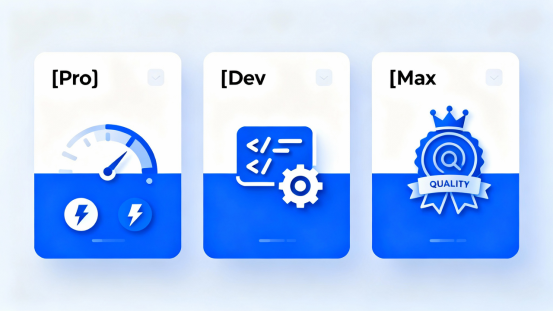
[Pro]: Like a quick-handed speed worker – fast execution, perfect for batch preview generation.
[Dev]: An open-source toy for geeks to tinker with. Fun, but high barrier to entry.
[Max]: Today's star player. It's not fast – actually somewhat sluggish – but it's the epitome of "slow and steady wins the race." It has the most massive parameter count, with prompt understanding that reaches obsessive levels. If you're picky about image quality or handling complex commercial needs, Max is your only choice.
Real-World Performance in Digital Life
Specs mean nothing without practical application. Let's see how it performs in actual scenarios.
1. Instagram Influencer Photo Rescue: Invisible Bystander Removal
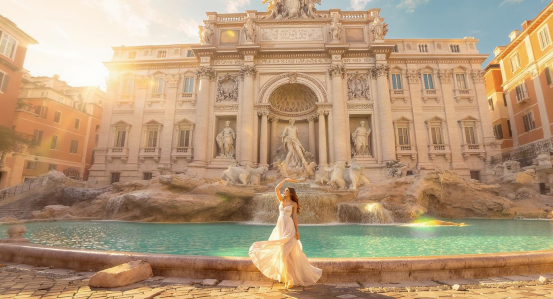
Scenario: You finally squeezed into a spot at Rome's Trevi Fountain for that perfect Instagram shot. But there's a tourist in a bright yellow vest eating gelato in the corner – totally stealing the spotlight.
Traditional AI: Erase the tourist, and that area becomes a blurry mess, or the replacement background has completely wrong perspective.
Max's Performance: Its "context awareness" is exceptionally strong. It analyzes the fountain's stone carving texture and lighting direction. When you request tourist removal, it not only makes them disappear but magically reconstructs the obscured Baroque-style columns with seamless texture and lighting.
2. Amazon Seller's Dream: Low-Cost Product Photography

Scenario: You're selling handcrafted aromatherapy candles on Amazon or Etsy. You photographed your product on your kitchen counter with messy fridge magnets in the background. You need a shot that looks like it was taken in a "Scandinavian minimalist luxury apartment."
Max's Performance: The worst fear is AI not recognizing what the candle is and arbitrarily changing your product's label text or candle shape. Protecting the subject is Max's forte. It can swap the background to "sunlit wooden table by the window" while ensuring not even a single letter on your candle jar's logo gets distorted.
3. Graphic Designer's Lifesaver: No More Gibberish
Scenario: You're designing a party invitation that reads "FRIDAY NIGHT," and the client suddenly decides it should say "SATURDAY NIGHT."
Max's Performance: Previous AI could generate images but produced indecipherable hieroglyphics when it came to text. Max represents a quantum leap in typography and spelling abilities. Tell it to change the text, and it not only spells correctly but mimics the original neon font style, glow effects, and even perspective angle – saving you from opening Photoshop.
Why FLUX.1 Kontext Max Dominates the Editing World
Saying it's "good" is too vague. Let's dissect its core advantages to understand why it might be the most powerful editing model currently available.
1. Terrifying Subject Freezing Ability (Character Consistency)
This is Max's crowning achievement. In continuous creation or multi-scene transitions, it locks character facial ID, hairstyle, and even clothing wrinkles like super glue. For IP operators or virtual influencer creators, this means your "digital person" won't look like long-lost siblings in every image – it's genuinely the same person.
2. Pixel-Level Instruction Compliance
Many models add a hat when you ask, then casually change the entire outfit. Max's logic is extremely strong, employing "alignment-like" technology that strictly distinguishes between "edit zones" and "protection zones." It understands complex logical relationships, like "change the red apple on the left table to green, but don't touch the water in the cup on the right." This point-and-shoot capability is true intelligence.
3. Genuine Physics-Based Lighting Understanding
This is Max's core differentiator from ordinary filters. When moving an object from indoors to outdoors, regular software simply does cut-and-paste background swaps that look fake as stickers. FLUX.1 Kontext Max recalculates lighting – if the background sun is on the left, shadows automatically generate on the object's right, and material reflections adjust accordingly. This physics-level realism is its ultimate weapon.
4. "Professional Typographer" Level Text Rendering
Though mentioned earlier, this deserves emphasis. In the [Max] version, text embedding processing is significantly enhanced. It generates long words and slogans with extremely high accuracy, even handling certain text layout arrangements – a productivity revolution for designers creating posters and cover images.
Practical Command Spells for "Speak and It Shall Be Done"

Mastering Max doesn't require programming knowledge – just learning how to give it commands. Core logic: action + object + what must be preserved.
Case 1: LinkedIn Professional Photo Transformation
Prompt: Change the casual t-shirt to a professional navy blue business suit, fitting the subject perfectly, while strictly maintaining the person's face structure, hairstyle, and skin tone.
Case 2: Etsy Product Atmosphere Upgrade
Prompt: Change the background to a cozy autumn setting with dried leaves and soft warm lighting, keeping the ceramic mug in the center completely unchanged.
Case 3: Architectural Sketch to Rendering
Prompt: Transform this line sketch into a photorealistic modern villa, concrete texture, sunset lighting, huge glass windows, maintaining the original perspective and structure.
Unlock "Divine Hands" Instantly on XXAI
While FLUX is open-source, FLUX.1 Kontext Max as the flagship version has enormous computational appetite. Running it smoothly locally requires expensive enterprise-grade graphics cards plus days configuring complex Python environments – too high a barrier for most people who just want to edit photos peacefully.
But this doesn't mean you can't use it.
We recommend the XXAI directly.

XXAI perfectly integrates FLUX.1 Kontext Max's full capabilities while solving all technical challenges:
No Hardware Barriers: Even with a laptop from years ago or a tablet, XXAI's web or desktop version gives you full-powered [Max] model computing.
One-Click Foolproof Operation: No complex node connections or parameter configurations. Open the interface, select Max model, upload images, input your ideas – AI handles the rest.
Flexible Switching: Beyond FLUX.1 Kontext Max, XXAI offers various world-class AI models for text, image generation, and video – all switchable and manageable with one click.
Don't let inadequate hardware limit your imagination. Open XXAI now, select FLUX.1 Kontext Max, and rescue those "ruined shots" from your photo library!